Albania has emerged as Europe's most exciting hidden gem, offering pristine Mediterranean beaches, UNESCO World Heritage cities, dramatic mountain landscapes, and exceptional value—all while remaining refreshingly uncrowded compared to neighboring Greece, Croatia, or Italy. With tourism exploding from 3 million visitors in 2015 to a projected 15 million in 2025, savvy travelers are discovering Albania before mass tourism changes its authentic character forever. This comprehensive guide equips you with everything needed to explore Albania's stunning Albanian Riviera, historic Ottoman towns, culinary treasures, and practical connectivity solutions through modern eSIM technology that keeps you seamlessly connected throughout your adventure.
Table of contents
Best Time to Visit Albania: Maximizing Weather, Crowds, and Value
Spring (April to June): The Optimal Window for Most Travelers
May and June represent Albania's absolute sweet spot for tourism. These shoulder months deliver pleasant temperatures averaging 15-27°C, perfect for outdoor activities without summer's scorching heat. Albania's landscapes burst with wildflowers carpeting hillsides, while beaches remain relatively empty compared to peak season chaos.
May stands out as potentially the single best month to visit Albania, offering warm days, cool nights, and wildflowers everywhere. The Albanian Riviera beaches like Ksamil, Dhërmi, and Gjipe Beach shine in May with crystal-clear waters, soft sand, and barely anyone around. Inland destinations including Lake Ohrid and Pogradec provide peaceful lakeside vibes without summer crowds.
Practical advantages: Accommodation prices remain 30-40% lower than July-August peaks, restaurant reservations aren't necessary, and UNESCO sites like Berat and Gjirokastër allow wandering without battling tour groups. The Dita e Verës festival in Elbasan celebrates spring's arrival with bonfires and traditional folk customs, marking one of Albania's oldest and most vibrant cultural festivals.
Early June extends this magic with slightly warmer water temperatures while maintaining shoulder season benefits. By mid-June, summer begins encroaching with rising prices and increasing tourist arrivals.
Summer (July to August): Peak Season Trade-offs
July and August deliver guaranteed sunshine, warmest sea temperatures, and Albania's most vibrant festival atmosphere—but at significant costs. European school holidays align perfectly with these months, creating maximum crowds and prices 50-100% higher than shoulder seasons.
The heat becomes genuinely oppressive in inland cities like Tirana, with temperatures routinely exceeding 35-40°C (95-104°F). Coastal areas benefit from sea breezes, making beach towns like Sarandë, Ksamil, and Himarë more comfortable.
Advantages include: Every restaurant, hotel, and tour operates at full capacity with extended hours; beach clubs and nightlife pulse with energy; all hiking trails remain snow-free; and the social scene thrives with fellow travelers. However, popular beaches require arriving before 9:00 AM to secure decent spots, and accommodation requires booking months in advance.
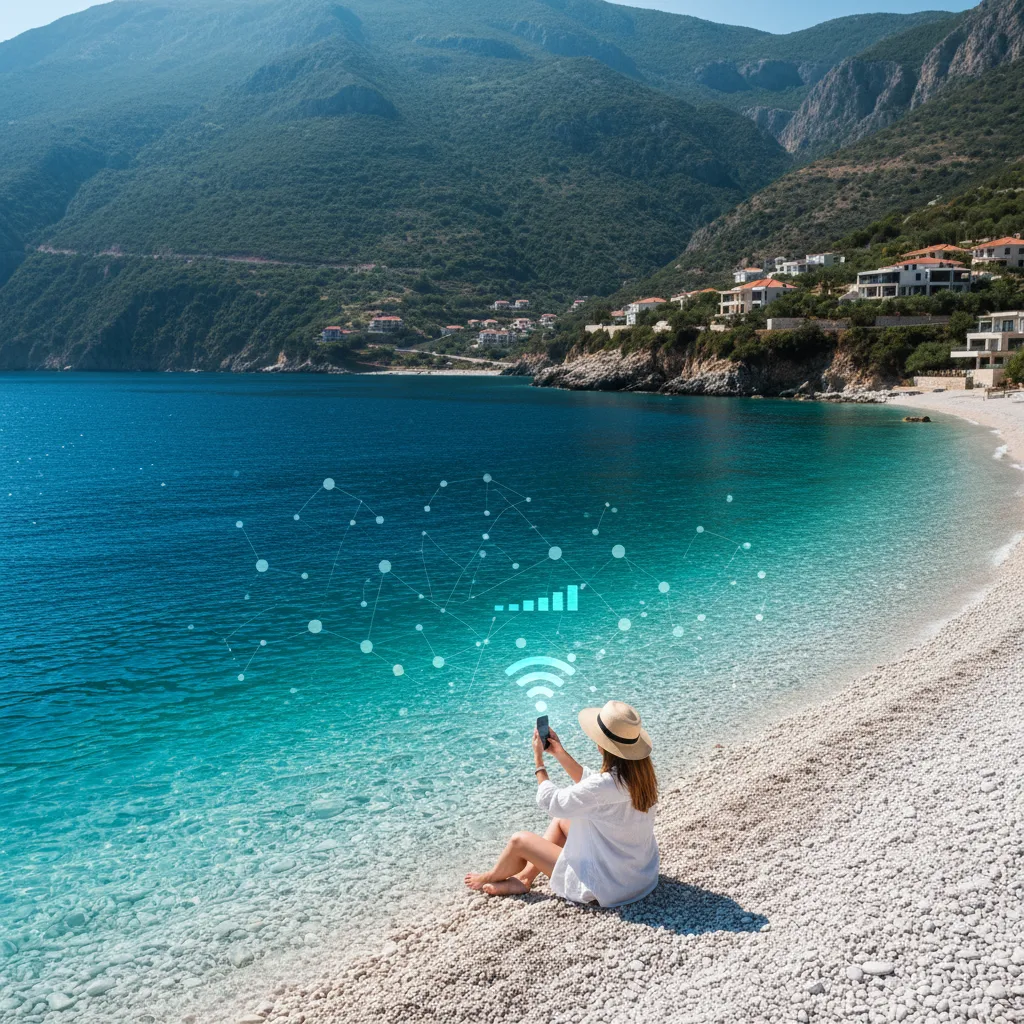
Staying connected on Albania's stunning Riviera beaches with eSIM technology
Autumn (September to October): The Second Sweet Spot
September rivals spring as Albania's best travel month, particularly early September when sea temperatures remain warm enough for swimming but crowds have significantly diminished. Temperatures average 20-28°C, ideal for both beach days and cultural exploration.
September specifically offers: Summer warmth without peak season prices, quiet beaches with perfect swimming conditions, fresh autumn produce flooding markets, and grape harvest season in wine regions. Leaves begin changing color in mountain regions like Theth National Park, creating stunning photography opportunities.
October works beautifully for cultural tourism and hiking, with mild weather perfect for exploring UNESCO stone cities Gjirokastër and Berat without summer's oppressive heat. Beach swimming becomes marginal by mid-October as water temperatures drop, though southern beaches around Ksamil remain pleasant.
Winter (November to March): Budget Exploration
Winter represents Albania's least touristy and most affordable season, with accommodation costs dropping 60-70% compared to summer peaks. However, many coastal hotels, restaurants, and beach clubs close entirely from November through March, particularly in smaller Riviera towns.
Advantages: Authentic local experiences without tourist infrastructure, rock-bottom prices, and opportunities to experience Albanian life as Albanians live it. Disadvantages: Shorter days, cooler temperatures (10-15°C), frequent rain particularly in northern and mountainous regions, and limited restaurant/hotel options outside major cities.
Entry Requirements and Visas: Getting into Albania
Visa-Free Entry for 90+ Nationalities
Albania offers exceptionally generous visa-free entry policies, making it among Europe's easiest countries to visit. Citizens from over 90 countries can enter without advance visas, including:
United States citizens: Up to 365 days visa-free—an extraordinary benefit unique among European destinations. For stays exceeding 90 days, registration with local police becomes mandatory within 8 days of arrival.
European Union citizens: 90 days within any 180-day period using either valid national ID cards or passports. Notably, Danish nationals must use passports as Denmark doesn't issue internationally valid ID cards.
United Kingdom citizens: 90 days visa-free using passports only (ID cards not accepted post-Brexit).
Canada, Australia, New Zealand, Japan, South Korea, Israel: 90 days visa-free.
GCC Countries (Saudi Arabia, UAE, Qatar, Bahrain, Kuwait, Oman): Visa-free May 1 to September 30 only.
Universal Entry Requirements
Regardless of nationality, all travelers must present:
Valid passport: Minimum 3 months validity beyond entry date with one blank passport page.
Proof of onward/return travel: Flight or bus tickets demonstrating departure plans.
Accommodation confirmation: Hotel reservations or invitation letter from Albanian host.
Sufficient funds: Evidence of €50 per day minimum financial means.
Travel/health insurance: Strongly recommended covering entire stay duration, though not strictly mandatory for all nationalities.
Valid Schengen Visa and Residence Permit Holders
Albania recognizes multiple-entry Schengen visas for 90-day stays, provided the visa was previously used in Schengen countries. Single-entry Schengen visas are NOT accepted.
US/UK residence permit holders can enter visa-free, provided permits remain valid throughout the Albanian stay.
The Albanian Riviera: Europe's Last Unspoiled Mediterranean Coastline
Why the Albanian Riviera Deserves Your Attention
The Albanian Riviera stretches approximately 150 kilometers along the Ionian Sea from Vlorë southward to Sarandë, offering arguably the Mediterranean's most pristine and affordable beach experience. Crystal-clear turquoise waters, dramatic mountain backdrops tumbling directly into the sea, hidden coves accessible only by boat, and white pebble or golden sand beaches create scenery rivaling anywhere in Greece or Croatia—at a fraction of the cost and crowds.
The variety astonishes: Family-friendly sandy beaches with full infrastructure, secluded stone coves requiring hiking to access, offshore islands just meters from shore, and dramatic cliff-lined bays with ancient caves. Unlike overcrowded Mediterranean destinations, many Albanian Riviera beaches remain genuinely peaceful even in peak summer.
Must-Visit Albanian Riviera Beaches
Ksamil: The “Maldives of Albania”
Ksamil represents the Albanian Riviera's crown jewel, frequently compared to tropical paradises for its impossibly turquoise waters and unique offshore islands just 50-100 meters from shore. The town sits within Butrint National Park, combining beach paradise with UNESCO archaeological significance.
Four tiny islands dot Ksamil's waters, accessible by swimming or renting paddleboards/kayaks, providing private beach experiences when mainland shores get busy. The paved coastal walkway makes sunset strolls magical.
Practical tips: Arrive before 9:00 AM during summer to secure prime beach lounger spots (€5-25 daily depending on season). Many beaches operate restaurant-affiliated lounger systems—purchasing drinks/food often includes complimentary or discounted loungers. September offers the best value with warm water and fewer crowds.
Gjipe Beach: The Hidden Canyon Paradise
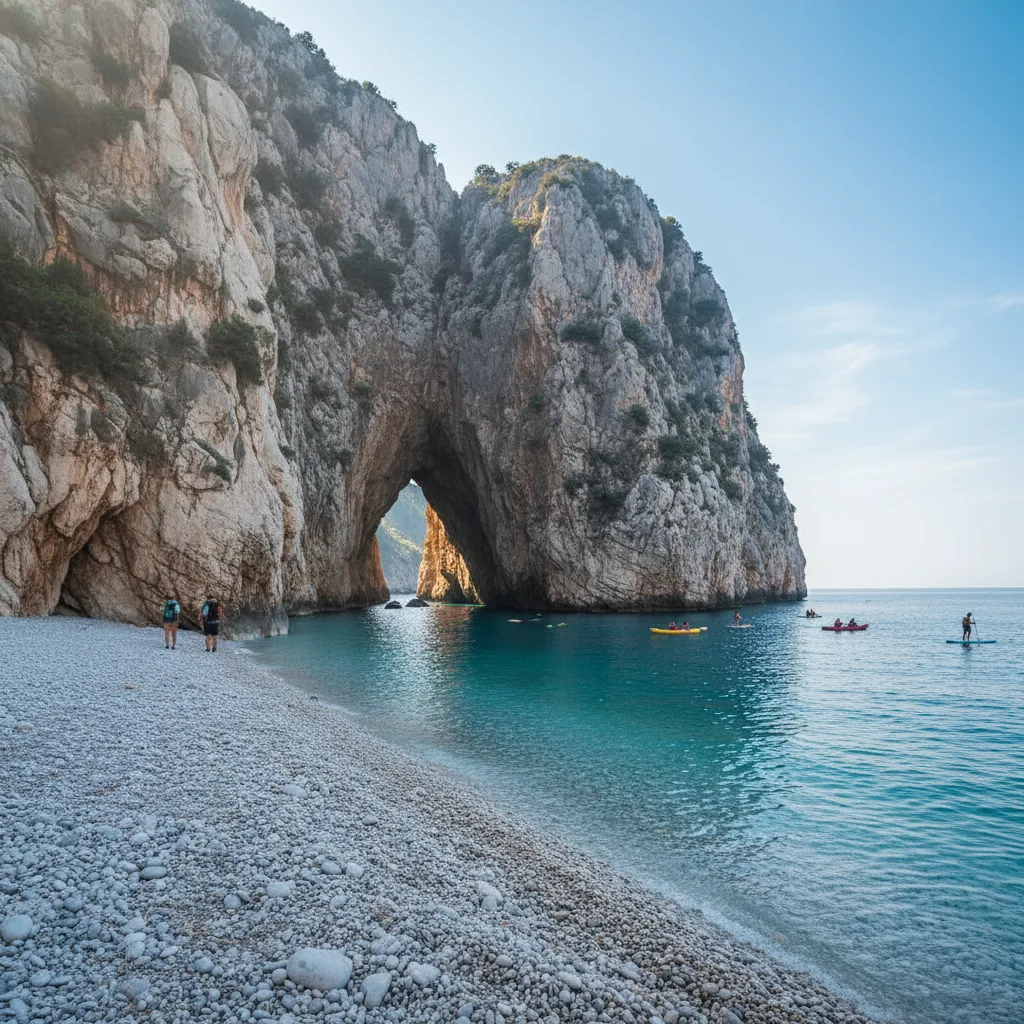
Gjipe Beach ranks as Albania's most spectacular hidden gem, accessible only via 40-minute hike along clifftops or boat from nearby towns. Nestled between towering ochre cliffs at the mouth of Gjipe Canyon, this pebble beach combines stunning azure seas with adventure opportunities.
Beyond swimming, Gjipe offers world-class rock climbing on both north and south-facing walls, canyon exploration with spiky trees overhead creating cool shade, and one rustic beach bar run by a local woman serving simple meals. The remote location ensures Gjipe never reaches the crowding levels of road-accessible beaches.
Access: Small paid parking (cash only) requires a 40-minute walk to the beach. Alternatively, boat tours from Dhërmi or Himarë include Gjipe stops.
Dhërmi and Drymades Beaches: Mountain Backdrop Majesty
Dhërmi Beach stretches along a wide bay with stunning mountain backdrops plunging directly to iridescent blue waters. The dramatic scenery—particularly when viewed descending the epic Llogara Pass—creates one of Albania's most photographed vistas.
Several 5-star resorts line Dhërmi Beach with restaurants and beach clubs offering full services. Drymades Beach, neighboring Dhërmi, provides similar beauty with slightly more laid-back vibes and diverse accommodation from basic bungalows to boutique hotels.
Both beaches attract adrenaline seekers with opportunities to explore nearby coves and caves, including sea kayaking adventures.
Himarë: Authentic Fishing Village Charm
Laidback Himarë retains old-timey beach town charm despite growing development along much of Albania's coast. Deep-seated fishing traditions create authentic character, with fishing boats bobbing lazily in turquoise water and delicious Mediterranean seafood restaurants lining the pebbled bay.
Spile Beach (Himarë's main beach) offers lovely morning and afternoon relaxation when crowds remain minimal, while the waterfront boulevard serves ice cream, cold drinks, and snacks. Livadhi Beach (20-minute forest walk north) provides livelier atmosphere with plentiful deck chairs. Filikuri Beach (south of Himarë) delivers secluded hideaway vibes, best reached by boat or kayak—though adventurous beachgoers reportedly scale cliffs using fixed ropes.
Grama Bay: Remote Perfection
Small and captivating, Grama Bay features fine white sand nestled between cliffs and surrounded by lush vegetation. The remote, isolated location makes sea access the easiest approach, with boat tours from Vlorë stopping here.
Don't miss ancient inscriptions on nearby rocks dating to Roman and Greek times—archaeological treasures casually accessible while beach-hopping.
Practical Albanian Riviera Tips
Where to base yourself: Dhërmi, Himarë, and Ksamil offer excellent bases with varying vibes—Dhërmi attracts younger travelers and party atmosphere; Himarë provides authentic local feel; Ksamil delivers pure beach paradise with family-friendly options.
Transportation: Renting a car provides maximum flexibility for beach-hopping and accessing remote coves. Public buses connect major towns but require patience with irregular schedules. Boat tours from Vlorë offer the best way to reach isolated beaches like Grama Bay and explore sea caves.
Beach essentials: Water shoes prove valuable as many beaches feature pebbles and stones. High-SPF sunscreen is essential—Mediterranean sun intensity surprises many visitors. Cash remains necessary for parking and some beach lounger rentals.
UNESCO World Heritage Sites: Berat, Gjirokastër, and Butrint
Berat: The “City of a Thousand Windows”
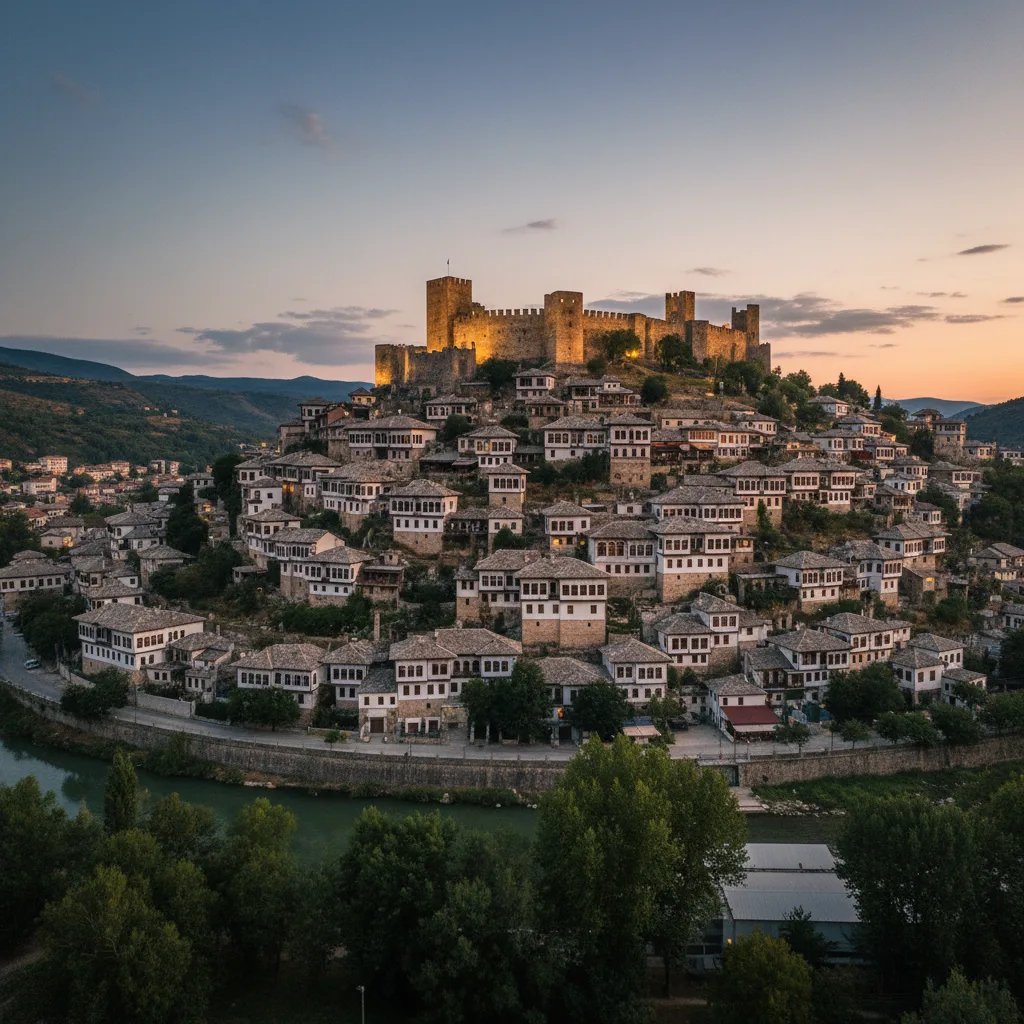
Berat showcases Ottoman-era architecture at its most spectacular, with white-washed houses featuring countless windows cascading down hillsides toward the Osum River. UNESCO recognized Berat in 2008 for its exceptional architectural character and centuries of peaceful religious coexistence.
The Kala (castle) dominates Berat from its hilltop position, with origins dating to the 4th century BC though most current structures come from the 13th century. Unlike typical castle ruins, Berat Castle remains a living neighborhood where families still reside within medieval walls, creating unique opportunities to experience history organically.
The Onufri Museum (within Berat Castle) houses one of the finest iconographic art collections anywhere, honoring the 16th-century master of post-Byzantine frescoes and icons who founded a painting school in Berat. Byzantine churches from the 13th century and Ottoman-era mosques coexist harmoniously, demonstrating Berat's multicultural heritage.
Visiting tips: Berat makes an excellent day trip from Tirana (2.5-3 hours by bus or car), though staying overnight allows experiencing the town's magical evening atmosphere. April-June and September-October provide optimal weather for climbing steep streets without summer heat. The climb to the castle is genuinely steep—comfortable walking shoes are essential.
Gjirokastër: The “Stone City”
Gjirokastër captivates visitors with its dramatic hillside setting, where Ottoman-era stone houses climb steep slopes of the Mali i Gjerë mountain range. The city earned UNESCO recognition in 2005 for its outstanding 17th-century kule (tower houses) characteristic of the Balkans region.
The architecture astounds: Major landowners built massive fortified tower houses featuring thick stone walls, multiple stories, and defensive capabilities. These kule create Gjirokastër's distinctive silhouette, particularly when viewed from surrounding valleys.
Gjirokastër Castle offers commanding hilltop views over the Drino River valley, with archaeological evidence showing hill occupation since the Stone Age though Byzantine documents first mention the castle in the 14th century. The castle now houses a weapons museum and Cold War-era US Air Force plane captured during Communist times.
The Old Bazaar forms Gjirokastër's social heart, where shops and bars cluster around cobblestone crossroads with authentic Ottoman commercial architecture. Gjirokastër is also known as the birthplace of Albania's most famous writer, Ismail Kadare, and infamous former dictator Enver Hoxha.
Visiting strategy: Gjirokastër deserves 2-3 nights minimum to fully appreciate its layers. The town is locally known as the “city of a thousand steps”—steep, narrow streets wind constantly upward, making exploration physical but rewarding. April-June and September-October avoid oppressive summer heat while wandering stone streets.
Butrint: Ancient Archaeological Wonder
Butrint represents Albania's most significant archaeological site, combining Greek, Roman, Byzantine, and Venetian heritage within a stunning natural setting. UNESCO recognition acknowledges Butrint as a microcosm of Mediterranean history with occupation from 50,000 BC through the 19th century AD.
The ancient theater (Greek period) remains fairly well-preserved, while the baptistery showcases exceptional paleo-Christian art including beautiful mosaic floor decoration from when the Roman monument was adapted for Christian use. The paleo-Christian basilica, rebuilt in the 9th century, reveals three-nave structure with transept and exterior polygonal apse.
Fortifications demonstrate construction evolution from Greek colony through Middle Ages. The site's special atmosphere derives from the rare combination of archaeology and nature, with ruins surrounded by Mediterranean forest and positioned between Lake Butrint and Vivari Channel.
Practical information: Butrint lies approximately 20km from Sarandë, making it an easy half-day excursion. Entry costs €10 per person. Visit early morning (opening time) or late afternoon to avoid midday heat and tour group crowds. The site covers substantial ground—comfortable walking shoes and water bottles are essential.
Enjoying authentic Albanian byrek while using mobile connectivity for restaurant recommendations
Albanian Cuisine: Traditional Dishes and Food Culture
Albanian cuisine evolved across centuries, blending Balkan, Mediterranean, and Ottoman influences into distinctive regional identities emphasizing fresh seasonal ingredients, olive oil, local dairy, and generous hospitality.
Essential Albanian Dishes to Try
Byrek: Albania's National Snack
Byrek represents Albania's most ubiquitous food—flaky phyllo pastry layers filled with cheese, spinach, meat, or vegetables, available everywhere from dedicated byrek shops to cafés, bakeries, and restaurants. It serves as breakfast favorite, midday snack, or even full meal.
Popular fillings include: byrek me djath (feta cheese), byrek me spinaq (spinach), byrek me mish (meat), and byrek me kungull (pumpkin). Each region adds subtle variations—coastal areas sometimes incorporate seafood while mountain regions favor heartier meat versions.
Where to find the best: Every town has dedicated byrek establishments baking fresh batches throughout the day, identifiable by queues of locals during breakfast hours. Tirana's Pazari i Ri (New Bazaar) area offers numerous excellent options.
Tavë Kosi: The National Dish
Tavë Kosi holds the distinction of Albania's official national dish—baked lamb (or chicken) with rice, eggs, and yogurt whipped together and cooked in a tavë (traditional metal frying pan). The result tastes simultaneously rich and refreshing, with baked yogurt developing soft consistency and slightly sour flavor balanced by juicy meat.
Variations abound: Some regions use chicken or beef instead of lamb, while vegetarian versions omit meat entirely. The dish takes its name from the cooking vessel, spawning numerous “tavë” variations throughout Albanian cuisine.
Ordering tip: Tavë Kosi appears on practically every traditional restaurant menu—look for it and order without hesitation to experience Albania's culinary heritage.
Fërgesë: Creamy Comfort Food
Fërgesë sums up Albanian comfort food—a creamy baked mixture of roasted peppers, tomatoes, onions, and gjizë (sour Albanian cottage cheese), cooked until bubbling and aromatic. The dish arrives sizzling in clay pots, meant for scooping with fresh bread.
Regional variations include fërgesë me mëlçi (with chopped liver, particularly popular in Tirana) for richer flavor, and vegetarian versions emphasizing the pepper-tomato-cheese trinity. Some areas add meat while others keep it purely vegetable-based.
Qofte: Albanian Meatballs
Qofte represents Albanian grilled meat tradition—seasoned ground beef, pork, chicken, or lamb formed into patties or balls and grilled over charcoal. The best versions come from specialty qofte shops where charcoal grilling imparts smoky flavor.
Tirana's Te Met Kodra near Pazari i Ri ranks as the city's most famous qofte destination, serving perfectly charred versions that have built legendary reputation. Qofte typically arrives with yogurt sauce, raw onions, and fresh bread.
Other Essential Dishes
Jani me Fasule (white bean soup) provides hearty comfort, especially during colder months, slow-cooked with tomato base, onions, and aromatic bay leaves, garlic, and paprika. Order with raw onions and yogurt on top for authentic Albanian experience—the crunch and bold onion flavor combined with creamy yogurt in tomato base creates perfect balance.
Petulla resembles doughnuts or fritters—fried dough served sweet (with honey, jam, sugar) or savory (with cheese) as breakfast favorite.
Tarator (cold yogurt soup with cucumbers, garlic, and dill) refreshes on hot summer days, similar to Greek tzatziki but in soup form.
Qifqi (rice balls) hails from Gjirokastër specifically—boiled rice mixed with egg and herbs, fried in specially shaped pans. Don't leave Gjirokastër without trying qifqi—it's rarely found elsewhere.
Dining Customs and Meal Timing
Albanian meals follow Mediterranean rhythms somewhat later than Northern European countries. Lunch (the main meal) typically occurs 1:00-3:00 PM, while dinner starts 8:00-9:00 PM. Many restaurants close between lunch and dinner service, particularly in smaller towns.
Albanians eat communally, with meals centered around shared dishes and conversation. Fresh bread accompanies every meal—refusing bread is considered odd. Coffee culture dominates Albanian social life, with cafés packed throughout the day and evening.
Budget Planning: How Much Does Albania Cost?
Albania maintains its reputation as Europe's most affordable travel destination, though prices have risen 20-30% since 2018 due to exploding tourism. Still, travelers can experience Albania for €40-60 daily compared to €100-150+ in Western Europe or neighboring Greece.
Daily Budget Estimates
Ultra-Budget Travelers (€15-25 daily): Hostel dorms (€3-4), cooking own meals or eating from markets/street food (€8-10), using public buses/furgons (€2-3), and sticking to free activities like hiking and beach days. This requires discipline and accepting basic conditions but remains absolutely achievable.
Budget-Conscious Travelers (€40-60 daily): Modest hotel rooms or guesthouses (€15-25), restaurant meals with local eateries (€15-20 for three meals), public transportation or occasional taxis (€5-10), and entry to attractions (€3-5). This budget allows comfortable experiences without significant sacrifices.
Mid-Range Travelers (€100-150 daily): 3-4 star hotels (€40-60), nice restaurant dining (€30-40), car rental or private drivers (€30-50), and organized tours/activities (€20-30). This level delivers excellent quality and convenience.
Luxury Travelers (€200+ daily): 5-star resorts particularly along the Albanian Riviera (€100-300), fine dining (€50+), private transportation, and premium experiences. Albania's luxury offerings provide exceptional value compared to Western European equivalents.
Specific Cost Examples (2025 Prices)
Accommodation: Hostel dorms €3-10; budget hotels €15-25; mid-range hotels €40-60; Albanian Riviera summer peak resorts €100-300.
Food: Local restaurant meals €5-8; mid-range dining €15-20 per person; byrek or street food €1-3; beer €1.50-3; coffee €1-2.
Transportation: City buses €0.40-0.50; intercity furgons €5-15 depending on distance; Tirana to Sarandë bus €17 (5 hours); car rental €25-50 daily.
Attractions: Most museums €3-5; Butrint National Park €10; cable car to Dajti Park €14 roundtrip; Skanderbeg Museum (Krujë) €5.
Beach costs: Loungers and umbrellas €5-25 daily depending on beach and season, with Ksamil highest in August.
Money-Saving Strategies
Visit during shoulder seasons (May-June, September-October) when accommodation costs 30-50% less than peak summer while weather remains excellent.
Eat lunch as your main meal—many restaurants offer excellent value lunch specials for €5-8 providing multiple courses, compared to €15-20 for equivalent dinner portions.
Use public furgons (shared minivans) instead of private taxis for intercity travel, costing one-quarter to one-third of private rates. Book accommodation in advance during summer months to secure better rates and availability.
Shop at local markets for produce, snacks, and ingredients—spectacular fresh fruit costs €0.50-2 per kg depending on season.
Staying Connected: Why eSIM Technology is Essential for Albania Travel
Modern Albania travel demands reliable connectivity for navigation, translation, restaurant reservations, accommodation bookings, sharing experiences, and emergency communications.
Mobile Coverage in Albania
Albania's mobile infrastructure has developed substantially, with major operators Vodafone Albania and ONE (formerly ALBtelecom) providing robust 4G services across 96-97% of the population. Major cities including Tirana, Durrës, Vlorë, Sarandë, and Shkodër offer strong 4G coverage with average download speeds of 30-40 Mbps.
5G deployment remains experimental, available only in limited Tirana areas as of 2025. 4G accounts for approximately 84% of mobile traffic and represents the reliable standard throughout Albania.
Rural and mountainous coverage limitations exist: The Albanian Alps (Accursed Mountains) including areas like Theth and Valbona have weak, intermittent, or completely absent connectivity. Remote inland regions and some isolated coastal coves lack coverage. Highway corridors maintain better coverage than areas away from main roads.
The eSIM Advantage for Albanian Travel
eSIM technology eliminates physical SIM card hassles entirely, enabling instant activation before departure through email QR codes. For Albania travelers, this represents a game-changing convenience solution.
Traditional roaming costs devastate budgets—many carriers charge €3-5 per day ($3.30-5.50) for international data, totaling €42-70 for a two-week trip. eSIM plans for Albania cost €4-25 for 1-2 weeks depending on data volume, representing 75-85% savings.
Key eSIM benefits specifically for Albania:
Instant activation without registration: Install your eSIM at home on WiFi; activate automatically upon Albania landing without airport delays. Physical SIM cards require visiting stores, dealing with language barriers, and 15-30 minute activation processes.
Navigate confidently: Albania's street signage can be confusing, particularly in mountain regions and old town UNESCO sites with winding medieval streets. eSIM data enables constant GPS navigation, eliminating getting lost stress.
Translation capabilities: Many Albanians outside Tirana tourist areas have limited English proficiency. Translation apps accessed through your eSIM data prove invaluable in restaurants, markets, and with locals.
Beach and remote area coordination: Finding specific hidden beaches like Gjipe requires navigation apps; coordinating with boat tour operators or meeting points benefits from messaging apps; and sharing your stunning Albanian Riviera photos in real-time requires data.
Dual SIM functionality: Keep your home number active for important calls while using eSIM for data, ensuring you never miss critical communications from home.
No home number interruption: Family and work can still reach you on your regular number while eSIM handles all data needs.
Graham Miranda eSIM: The Albania Connectivity Solution
Graham Miranda eSIM provides specifically optimized connectivity solutions for Albania travelers, combining affordability, reliability, and seamless activation.
Graham Miranda partners with Albania's leading mobile operators—Vodafone Albania and ONE—ensuring maximum coverage in cities and optimized rural access where infrastructure exists. Plans range from 1GB budget options (€4-5) to 20GB+ packages for heavy data users (€25-40), accommodating everyone from light navigation users to social media influencers documenting every moment.
The straightforward three-step process: Select your Albania plan on Graham Miranda's website, receive QR code via email within minutes, scan to activate before or upon arrival, and begin using data immediately when landing in Tirana. No complex registration, no language barriers, no hunting for stores in unfamiliar cities.
Coverage specifics: Graham Miranda eSIM delivers strong 4G connectivity throughout Tirana, Durrës, Berat, Gjirokastër, the entire Albanian Riviera (Vlorë, Dhërmi, Himarë, Sarandë, Ksamil), and major highway corridors. Expect reduced or absent coverage in Albanian Alps regions and extremely remote inland areas—this limitation applies to all providers due to infrastructure gaps, not eSIM-specific issues.
Customer support remains accessible throughout your trip via WhatsApp, email, and online chat, with multilingual assistance handling technical questions immediately. For travelers encountering connectivity issues or needing plan adjustments, responsive support transforms potential frustration into quick solutions.
Cost comparison demonstrates value: Graham Miranda eSIM Albania plans (€4-40 for typical 1-3 week stays) dramatically undercut traditional roaming charges (€42-105+ from many European carriers) while offering superior reliability and flexibility.
Installing Your eSIM Before Departure
Device compatibility: iPhone XS and newer, Samsung Galaxy S20 and newer, Google Pixel 3 and newer, and most recent mid-to-high-end smartphones support eSIM. Verify your device compatibility before purchasing by checking Settings > Cellular/Mobile Data (iOS) or Settings > Connections > SIM Manager (Android).
Installation steps: Purchase your Graham Miranda Albania plan online, receive QR code email confirmation, connect to WiFi at home, navigate to phone's cellular settings, scan QR code, follow on-screen activation prompts (takes 2-3 minutes), and you're ready. The eSIM activates automatically upon detecting Albanian networks when you land.
Pro tip: Install your eSIM 1-2 days before departure while home on reliable WiFi, ensuring everything works correctly before travel stress begins. This advance preparation means stepping off the plane in Tirana with immediate connectivity—no WiFi hunting, no store searching, just instant connection.
Safety in Albania: Practical Considerations for Travelers
Albania ranks among Europe's safest tourist destinations, with violent crime against foreigners extremely rare and overall crime rates below many Western European countries.
Crime and General Safety
Violent crime targeting tourists is essentially nonexistent. Albania's crime index for 2024 sits at 45.4—roughly equivalent to Canada and significantly lower than major European capitals. Most visits are completely problem-free when following normal travel precautions.
Petty theft remains the primary concern, though less frequent than in major European tourist hubs like Barcelona, Paris, or Rome. Pickpocketing and bag snatching can occur in crowded areas including markets, airports, public transportation facilities, hotel lobbies, restaurants with outdoor seating, and tourist attractions.
Practical prevention: Keep valuables secure in inside zippered pockets, avoid displaying expensive jewelry or large cash amounts, use hotel safes for passports and extra money, maintain awareness in crowded spaces, and avoid deserted streets late at night.
Tirana safety specifics: Albania's capital enjoys safety conditions similar to medium-sized European cities, with vibrant nightlife and most areas safe to walk even late at night. Stick to well-lit central streets and avoid poorly lit alleys after dark.
Rural areas prove even safer than cities, with crime rates exceptionally low and locals known for extraordinary hospitality and willingness to help visitors.
Solo and Female Travelers
Many solo travelers, including women, report overwhelmingly positive Albanian experiences. Street harassment occurs less commonly than in some neighboring countries, with Albanians generally respectful and friendly toward foreign visitors.
Female traveler feedback consistently highlights Albania as an “extremely safe and hospitable destination” with problem-free experiences traveling alone through cities, mountain villages, and coastal regions. Sexual assault and violence toward female travelers remain thankfully almost unheard of.
Standard safety practices apply: Avoid isolated areas at night, inform someone of your plans, choose well-reviewed accommodations, and trust your instincts.
Road Safety: The Primary Hazard
Poor driving habits and variable road quality pose greater risks than crime for Albania travelers. Albanian drivers can be aggressive, traffic rules aren't consistently followed, and roads in rural areas may have potholes or lack proper lighting.
Driving precautions: Avoid night driving when possible, drive defensively and anticipate erratic behavior from other drivers, consider hiring local drivers familiar with road conditions for complex routes, ensure rental cars have comprehensive insurance, and exercise extra caution on mountain roads.
Emergency Contacts
Albania's universal emergency number is 112 (police, medical, fire)—accessible free from any phone. For service-specific assistance: 129 (ambulance), 127 (police), 128 (fire department). Tourist Police in Tirana: +355 4 222 2222.
Embassy contacts: Keep your embassy or consulate information accessible—U.S. Embassy Tirana: +355 4 224 7285; UK Consulate details available through gov.uk resources.
Travel insurance covering medical emergencies and theft provides essential security, with many policies offering 24/7 assistance hotlines.

Albania
- Premium eSIM data plan for Albania – instant activation
- Compatible with all unlocked eSIM devices worldwide
- QR code delivered instantly via email
- Shareable hotspot with unlimited device connections
- High-speed 4G/5G data with no throttling
 English
  Deutsch